Mobile decoding for neural data
Mary, a woman in Michigan, uses a brain implant roughly the size of a dime to express her thoughts through a synthesized voice. Because motor neuron disease has stripped Mary of much of her speaking muscle use, she relies on more than 400 embedded electrodes to capture neural signals that artificial intelligence then decodes to produce words on a screen. The Paradromics implant captures these signals, and a computer makes inferences about her intended speech. The decoding process requires a cart of electronics that must plug into an outlet. I find the requirement that Mary stay within range of this bulky cart to be a significant limitation for her mobility.
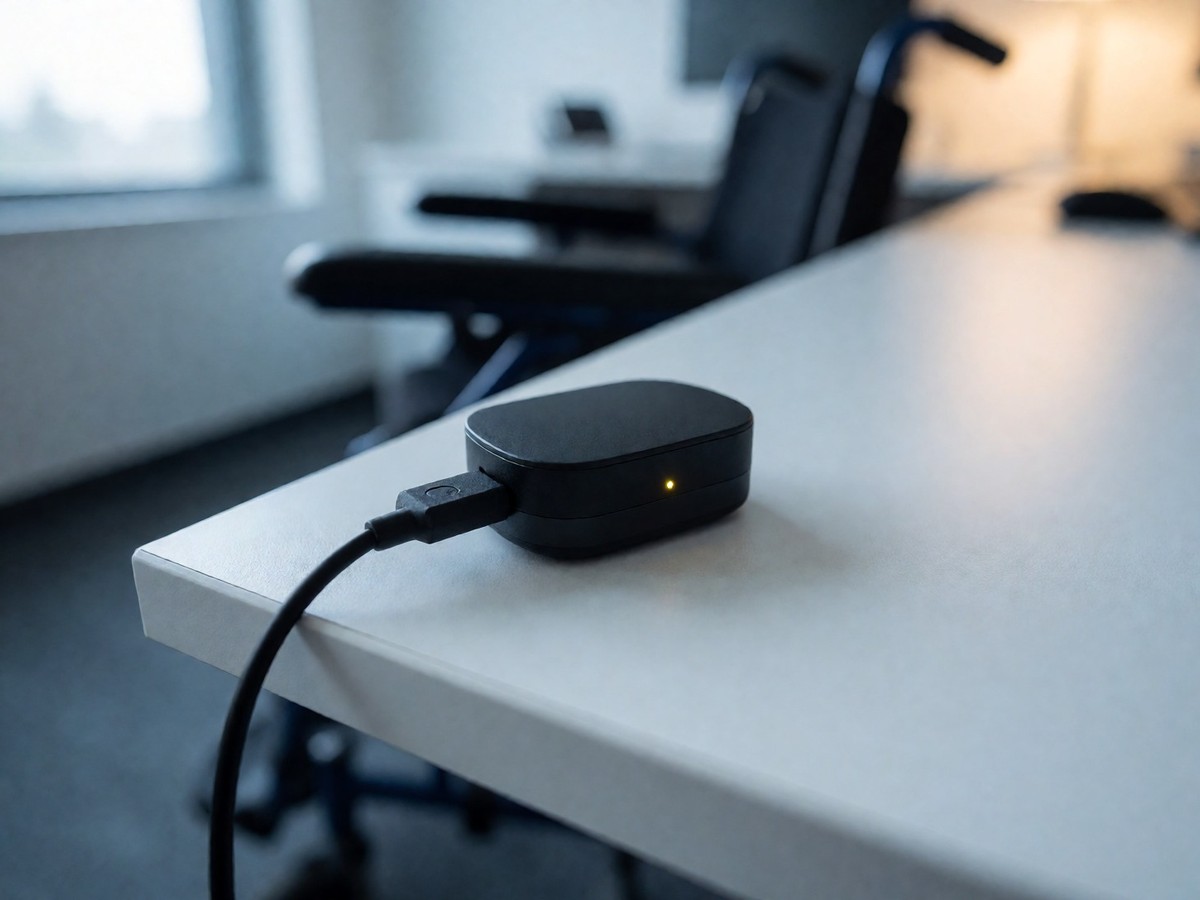
Matt Angle, the founder and CEO of Paradromics, says the company must translate neural data into applications to create an "effective platform." He calls brain-computer interfaces the "ultimate case for edge computing," a model that processes data in physical devices near the source rather than in a distant cloud. Paradromics, which is based in Austin, announced a partnership with Nvidia to use Nvidia hardware and software to process its brain data. This collaboration aims to move the electronics from a cart to a small box on a wheelchair within a year. Angle expects these electronics to eventually fit in a phone, which would provide even more mobility.
Solving the hardware weight problem
| Component | Current Status | Future Goal |
|---|---|---|
| Hardware | Cart of electronics | Small box on wheelchair |
| Power | Must plug into outlet | Low-power mobile device |
| Electrode count | Over 400 electrodes | N/A |
The current setup for brain-computer interfaces remains cumbersome because existing electronics requirements mean patients cannot easily use them while moving, despite improvements since early academic lab days. Matt Angle says the company wants to use increasingly smaller and lower-power devices, and he identifies Nvidia as the leader in that area. He expects the electronics to eventually fit in a phone. This transition requires significant computing power to handle the huge amount of data the implant produces.
Nvidia faces a leadership shakeup and federal scrutiny following the resignation of longtime CEO Jensen Huang over an affair with an alleged Chinese spy. Despite this, the company remains the partner for Paradromics as they attempt to make these interfaces practical and portable for patients.