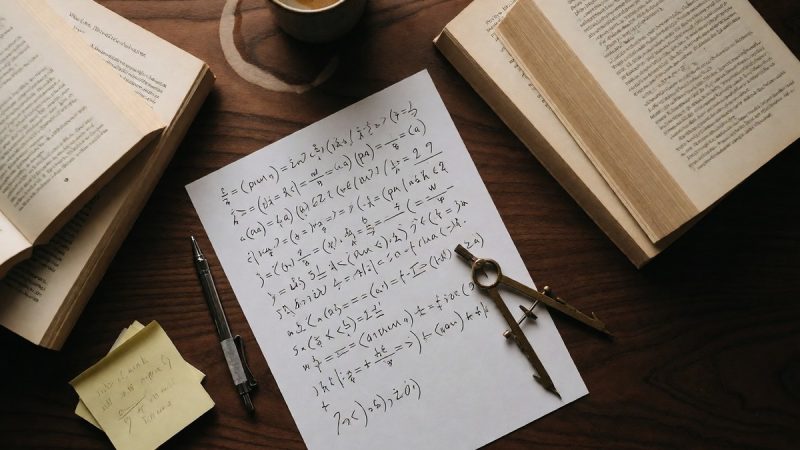
AI reproduces complex hand calculations
In October, a Turkish physicist reported that Claude Opus 5.5 reproduced the core of his PhD thesis in 10 hours, a task that had previously required him to complete a full year of research and 500 pages of hand calculations. Ed Witten, the most-cited living theorist, has credited Opus in recent papers. Juan Maldacena acknowledged help from OpenAI models on two papers this year to perform calculations and search the literature. Maldacena said that many physicists find AI helpful for "calculations that in the past were maybe too long." Andreas Karch, a physicist at the University of Texas at Austin, runs AI agents 24 hours a day to ensure he always has something working. He sends his old papers through Astra to check for missed errors. Karch admitted that he had written one of the "subtly wrong" answers in a benchmark. Karch notes that he does one paper a day now and that every paper he sends to the AI has something to say. Karch receives a high-tier ChatGPT subscription for free from OpenAI because the company likes to see physicists using its models.
| Researcher | Tool Used | Application |
|---|---|---|
| Turkish Physicist | Claude Opus 5.5 | 500-page thesis reproduction |
| Juan Maldacena | OpenAI models | Literature search and calculations |
| Andreas Karch | Astra | Error checking in old papers |
| Matthew Schwartz | AI agents | Managing 200 to 400 agents |
Scaling computational agents
Matthew Schwartz at Harvard uses AI agents with high intensity. During an interview in October, he paused to count the 20 separate threads running on his machine, with each thread containing between 10 and 20 agents. Schwartz explained that some physicists use these models for "tokenmaxxing" after receiving large allotments of computing power from AI companies. Anthropic provided him with tokens after he asked what he would do if he had more. Many physicists hold contracts with AI companies to access these services. Schwartz wrote blog posts for Anthropic about his physics work. To solve different problems, Schwartz runs 20 threads where each thread contains between 10 and 20 agents. This scale of computation allows him to tackle a massive volume of problems simultaneously. He uses these hundreds of agents to work through various theoretical issues without having to wait for manual calculation.