Handy Laptop Mode
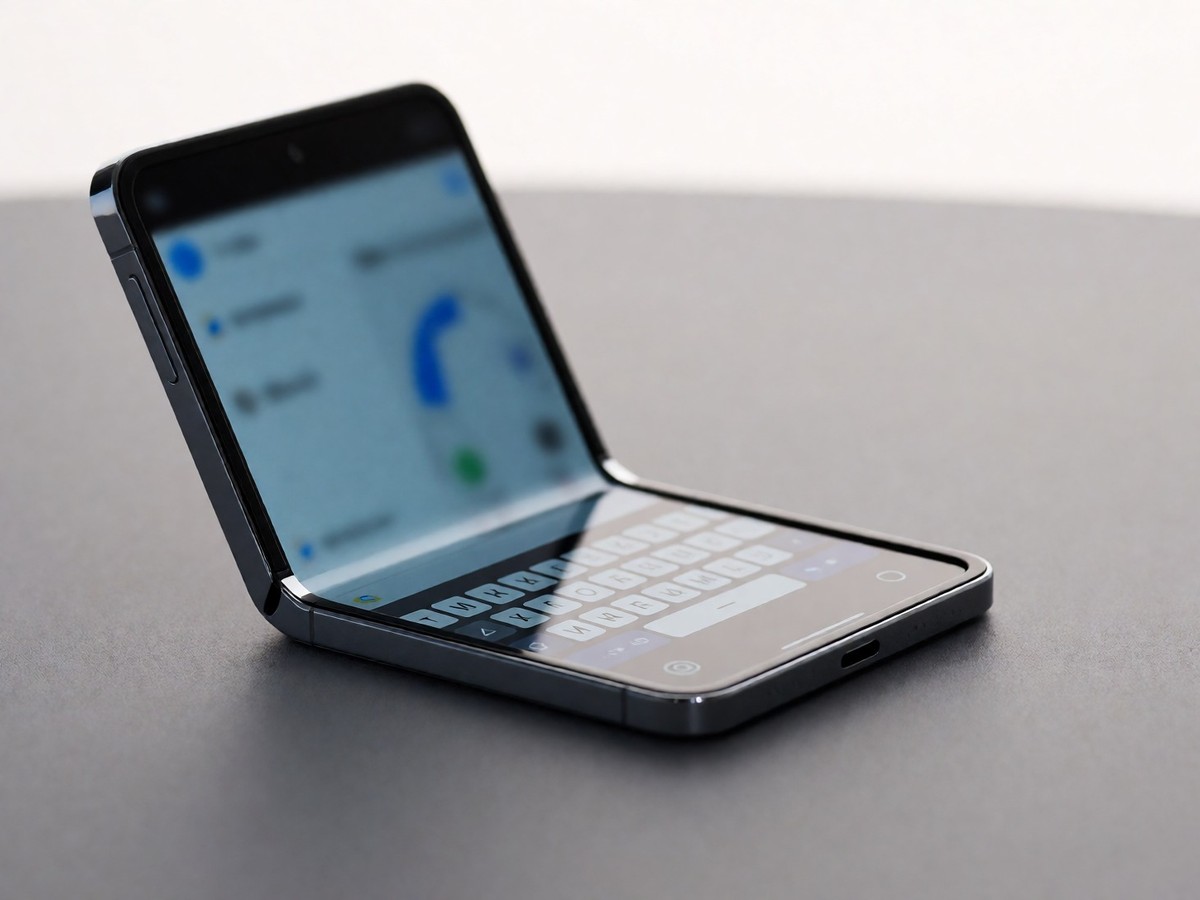
I find Edovia’s Screens 5.10.6 update highly practical because it turns the iPhone Duo into a tiny MacBook when you use the device in its partially open, clamshell configuration. The app’s new Laptop Mode displays your remote desktop on the upper half of the screen and provides a keyboard with a trackpad below when you fold the phone halfway into its clamshell configuration. This software lets you control a computer from an iPhone, an iPad, another Mac, or even the Vision Pro. The virtual keyboard supports multiple languages and lets you swipe down on keys to see alternative characters, much like you do on an iPad. I find that I can use the trackpad with all the existing Screens gestures to navigate my remote desktop. This specific functionality makes the iPhone Duo feel more like a small, mobile computer instead of a simple phone. The update provides a keyboard for tiny typing on half the display. I find the interface easy to use for remote access.
Virtual controls
The digital keyboard and trackpad are not a complete replacement for actual physical keyboards and trackpads, but I find they are good enough to use in a pinch or for tasks where you do not need to type anything lengthy. I would recommend this update for quick remote sessions where you do not need to type anything long. The trackpad works reliably with the app’s gestures to make remote control simple. However, Adam Mosseri says that designing Instagram "in a way that feels great" for the device will be "pretty challenging" for developers. This difficulty for developers shows how different the iPhone Duo’s form factor is compared to previous iPhones. I find that the software handles the hardware’s unique hinge by splitting the display to provide a much better user experience than a standard full-screen keyboard. The software turns half the display into a keyboard for tiny typing. This makes the device far more useful for people who need to access their computers on the move, especially since the interface splits the screen to provide a dedicated space for your remote desktop and a workspace for your fingers.